



Merino wool is one of the finest natural fibers of all – fine, soft, temperature-regulating, and durable. However, most damage to merino clothing occurs not during wear, but during washing. Incorrect temperature, wrong detergent, or too intense a program are enough to render a sweater unusable. In this article, we show you step by step how to properly care for merino wool – so that it retains its properties and stays beautiful for many years.
Why merino wool is so easy to care for – if treated correctly
Before we get to the actual washing, an important point: in most cases, merino wool doesn't even need to be washed. The fiber is naturally self-cleaning, odor-neutral, and dirt-repellent. Often, simply airing out the garment is completely sufficient.
This is due to the natural wool grease (lanolin) and the fiber structure, which hardly gives bacteria a chance. While cotton or synthetics need to be washed after every wear, a merino sweater can often be worn for several weeks before it truly needs to be washed.
This property makes merino wool not only easy to care for but also sustainable: less washing means less water, less energy, and less wear and tear.
Airing out instead of washing: The first step to care
Before you put the sweater or baby bodysuit in the wash, check if it's really necessary. In most cases, one of these three approaches is sufficient:
- Airing out: Hang the garment overnight in the fresh air – ideally on a hanger outdoors or by an open window. Odors and moisture usually disappear on their own.
- Steam treatment: A steam brush or steamer refreshes merino clothing, smooths wrinkles, and kills bacteria.
- Spot cleaning: For small stains, a damp cloth with a little mild wool detergent is often enough. This way you avoid a complete wash.
When does merino wool really need to be washed?
In the following situations, a complete wash is worthwhile:
- Visible stains that cannot be removed locally
- Strong sweat odors that do not disappear even after airing out
- After long-term storage at the end of the season
- For baby clothes after contact with spit, milk, or porridge
Rule of thumb: It's better to wash once too little than once too much. Every wash means a small amount of wear and tear for the fibers.
Step by step: Washing merino wool in the washing machine
Yes, you can wash merino wool in the washing machine – if you choose the right settings. Here's how:
1. Prepare the laundry
Turn the garment inside out. This protects the fibers from friction and preserves the color. Close zippers and buttons to prevent snagging. Sort by color – do not wash light and dark wool together.
2. Use a laundry bag
Place delicate items such as baby bodysuits, thin sweaters, or knitted dresses in a laundry bag. This reduces mechanical stress in the drum.
3. Choose the right detergent
Use a special wool detergent with a neutral pH value. Never use heavy-duty detergents or detergents with enzymes – they break down the wool. A good wool detergent often also contains lanolin, which renews the wool's natural protective layer.
4. Set the program
Select your machine's wool program or hand wash program. Important are:
- Temperature: maximum 30 °C, even better 20 °C
- Spin cycle: minimal (max. 600 rpm) or off entirely
- Drum movement: gentle, with long pauses
5. Do not overfill the machine
The drum should be no more than half full. Wool absorbs a lot of water and needs space to move freely.
6. Remove immediately after washing
Do not leave the laundry in the drum for hours. Remove it as soon as the program is finished.
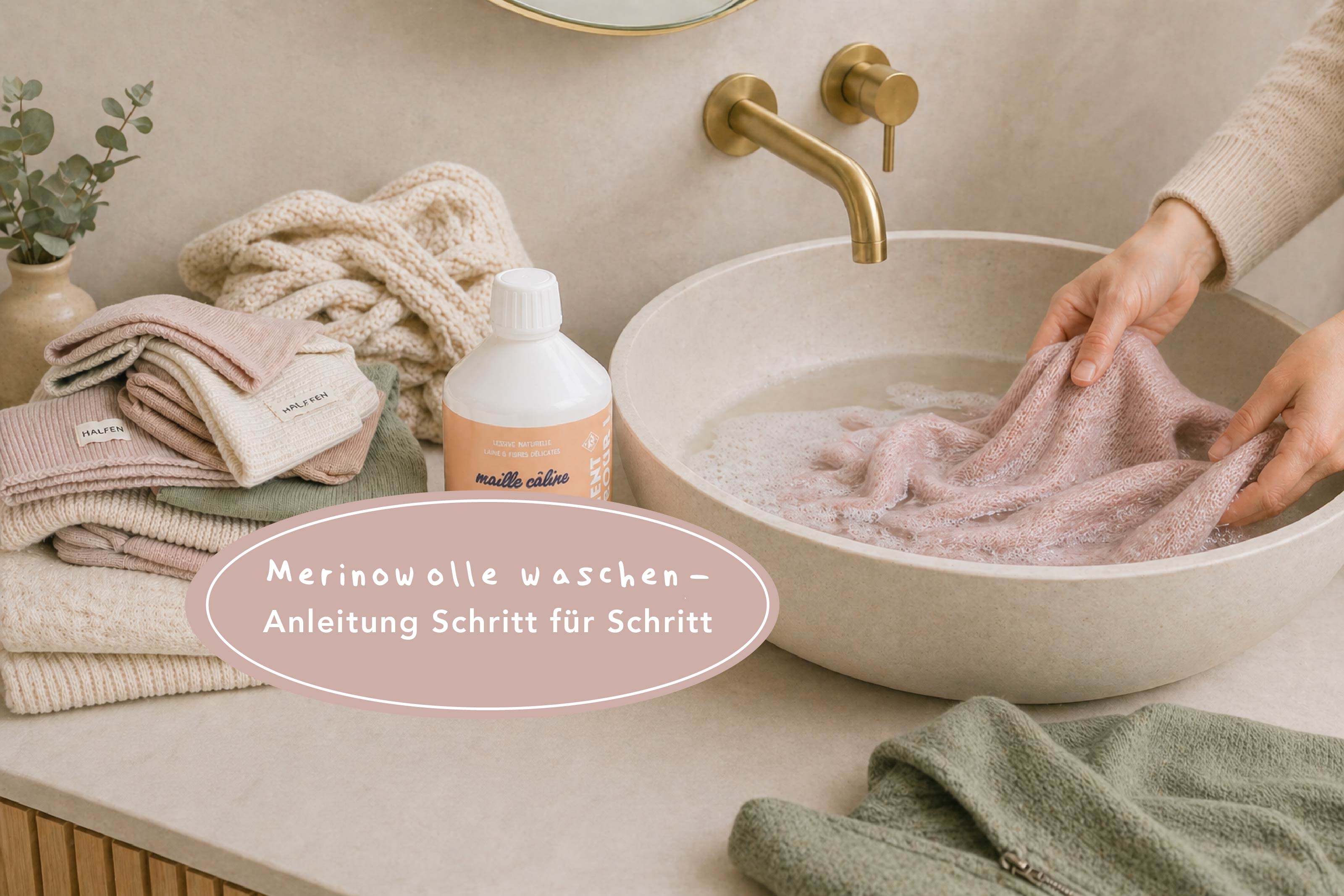
Step by step: Hand washing merino wool
For particularly delicate items or if you want to be extra careful, hand washing is the gentlest option:
1. Fill with lukewarm water
Fill a clean sink or tub with lukewarm water (about 20–30 °C). Important: The temperature must not fluctuate significantly during the entire wash, otherwise the wool will felt.
2. Add wool detergent
Add a small amount of wool detergent to the water and distribute it evenly. Only immerse the garment once the detergent is well dissolved.
3. Gently immerse and press
Completely immerse the garment and gently press it through the water repeatedly. Do not rub, do not knead, do not wring – this leads to felting.
4. Let it soak
Let the garment rest in the water for 10–15 minutes. For stronger odors, the soaking time can be extended to up to 30 minutes.
5. Rinse thoroughly
Drain the wash water and refill the tub with clear, equally tempered water. Gently press the garment through until the water remains clear. Repeat the process once or twice.
6. Gently remove water
Gently squeeze the garment between your hands. Never wring or rub. Then roll it in a clean towel and gently press out the water.
Drying: The most important step
This is where most mistakes happen. Wet wool fabric is heavy and easily deforms if dried incorrectly.
- Dry flat: Lay the garment flat on a dry towel. This way it retains its shape.
- Do not hang: On a hanger, wet wool will stretch and lose its shape.
- Do not tumble dry: Heat and friction will cause the fibers to felt.
- Do not expose to sunlight: Direct sunlight can fade colors and make fibers brittle.
- Do not place on a radiator: Dry heat damages the fiber structure.
Turn the garment every few hours so that both sides can dry evenly.
Felted or shrunk merino wool: Can it be saved?
If a sweater has been washed too hot and has shrunk, there's a rescue attempt: place the garment in lukewarm water with a splash of hair conditioner or baby shampoo. Both contain ingredients that relax the fibers.
After 20 minutes of soaking, gently pull the garment into shape and let it dry flat. In mild cases, a large part of the original shape can be restored this way. With severe felting, there is usually nothing more to be done.
Storage: How to keep merino wool beautiful over the summer
If you want to keep your merino clothing in good condition over the warm season, you should consider the following points:
- Store clean: Be sure to wash or clean wool before storing to prevent food residues or skin flakes from accumulating. These attract moths.
- Breathable storage: Use fabric bags or cardboard boxes instead of plastic boxes. Wool needs to breathe.
- Keep moth protection natural: Lavender, cedar wood, or patchouli help against moths – without chemicals.
- Store flat: Do not hang heavy knitwear; fold it flat so it retains its shape.
Conclusion: With proper care, merino wool lasts for years
Washing merino wool is easier than many people think – if you stick to a few basic rules: low temperature, wool detergent, no wringing, dry flat. But above all, merino wool needs to be washed less frequently than other materials. Airing out replaces machine washing in most cases.
Those who treat their merino clothing well will enjoy it for a long time – often for years, sometimes for generations. A piece you love to wear every day deserves this care.
Frequently asked questions about caring for merino wool
Can merino wool be washed in the washing machine?
Yes, that is possible. Important are the wool program, a maximum temperature of 30 °C, a special wool detergent, and a minimal spin cycle. Delicate items should also be placed in a laundry bag.
Which detergent is suitable for merino wool?
Use a special wool detergent with a neutral pH value. Heavy-duty detergents or detergents with enzymes break down the wool fibers. Wool detergents with lanolin also care for the fibers.
At what temperature should merino wool be washed?
Maximum 30 °C, even better 20 °C. Higher temperatures will cause the wool to shrink or felt. Strong temperature fluctuations during washing also harm the fibers.
How often do I need to wash merino wool?
Significantly less often than other materials. Merino wool is naturally self-cleaning and odor-neutral. Airing out is sufficient in most cases. Washing is only necessary for visible stains or strong odors.
Can merino wool be tumble dried?
No. Heat and mechanical friction in the dryer will cause the wool to felt and shrink. Always dry merino wool flat on a towel.
What to do if a merino sweater has shrunk?
Place it in lukewarm water with some hair conditioner or baby shampoo. After 20 minutes, gently pull it into shape and let it dry flat. In mild cases, the sweater can be stretched again this way.
How do I store merino wool over the summer?
Wash or clean it thoroughly before storing, then store it in breathable fabric bags or cardboard boxes. Lavender, cedar wood, or patchouli naturally protect against moths. Store heavy knitwear flat to maintain its shape.
Share:
DIY Easter Wreath from Fabric Scraps
Properly Storing Wool Clothing – Sustainable Care for All Ages