


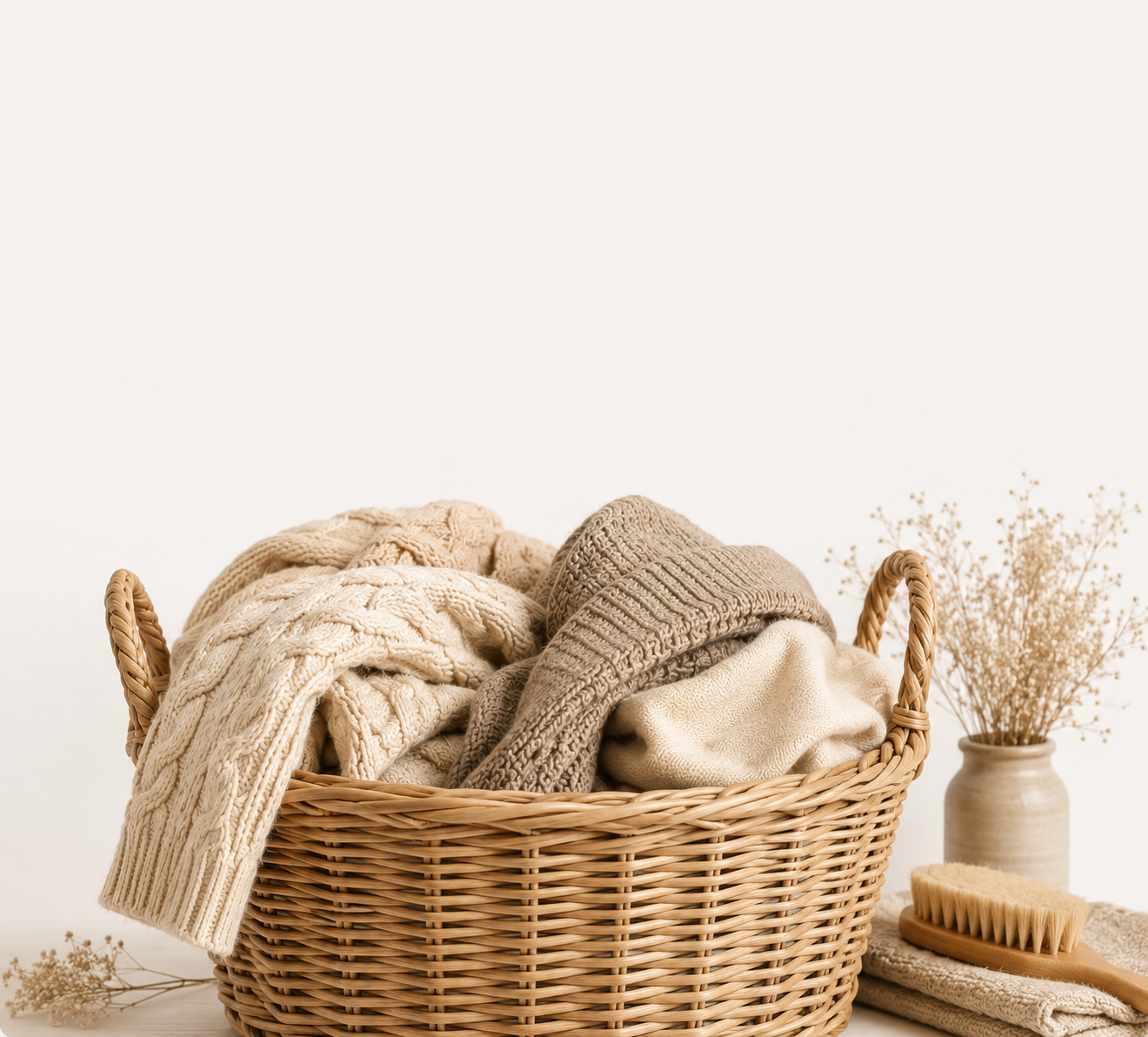
The Right Care for Natural Fibers
Natural materials such as wool, silk, alpaca, and cashmere don't require complicated care — just the right care. Often, airing them out is enough. If washing is necessary, low temperatures, a gentle detergent, and careful drying will help.
NATURAL MATERIALS
GENTLE ON SKIN & ENVIRONMENT
LONG-LASTING JOY FROM YOUR FAVORITE PIECES
SUSTAINABLE CARE
Wash less, air more
Wool and wool blends absorb odors slowly and can often simply be aired out in the fresh air. This protects the fibers, saves water, and extends the lifespan of the clothing.
TIP: Air out garments overnight outdoors or by an open window.

1. How to Wash Wool Correctly
For Merino wool, wool fleece, boiled wool, cashmere, and alpaca:
- Hand wash or wool cycle
- maximum 30°C
- use special wool detergent
- do not rub, do not wring
- spin briefly (max 400 rpm) or gently squeeze out
- dry flat

2. How to care for particularly delicate cashmere blends
Our cashmere blend of 30% cashmere and 70% merino wool loves gentle care.
Hand washing in lukewarm water or a very gentle wool cycle is ideal. Afterwards, gently pull the garment into shape and dry it flat on a towel.
PLEASE AVOID: Heat, strong spinning, rubbing, wringing, and tumble drying.

3. Silk & Wool-Silk
Wool-silk is particularly fine and pleasant on sensitive skin. Therefore, please treat it with extra care.
- Hand wash or very gentle wool cycle
- mild wool/silk detergent
- do not soak
- do not rub
- dry flat
- avoid direct sunlight

4. Cotton & Linen
While cotton and linen are less delicate, they also benefit from gentle care.
- wash inside out
- wash with like colors
- low to medium temperature
- mild detergent
- air dry
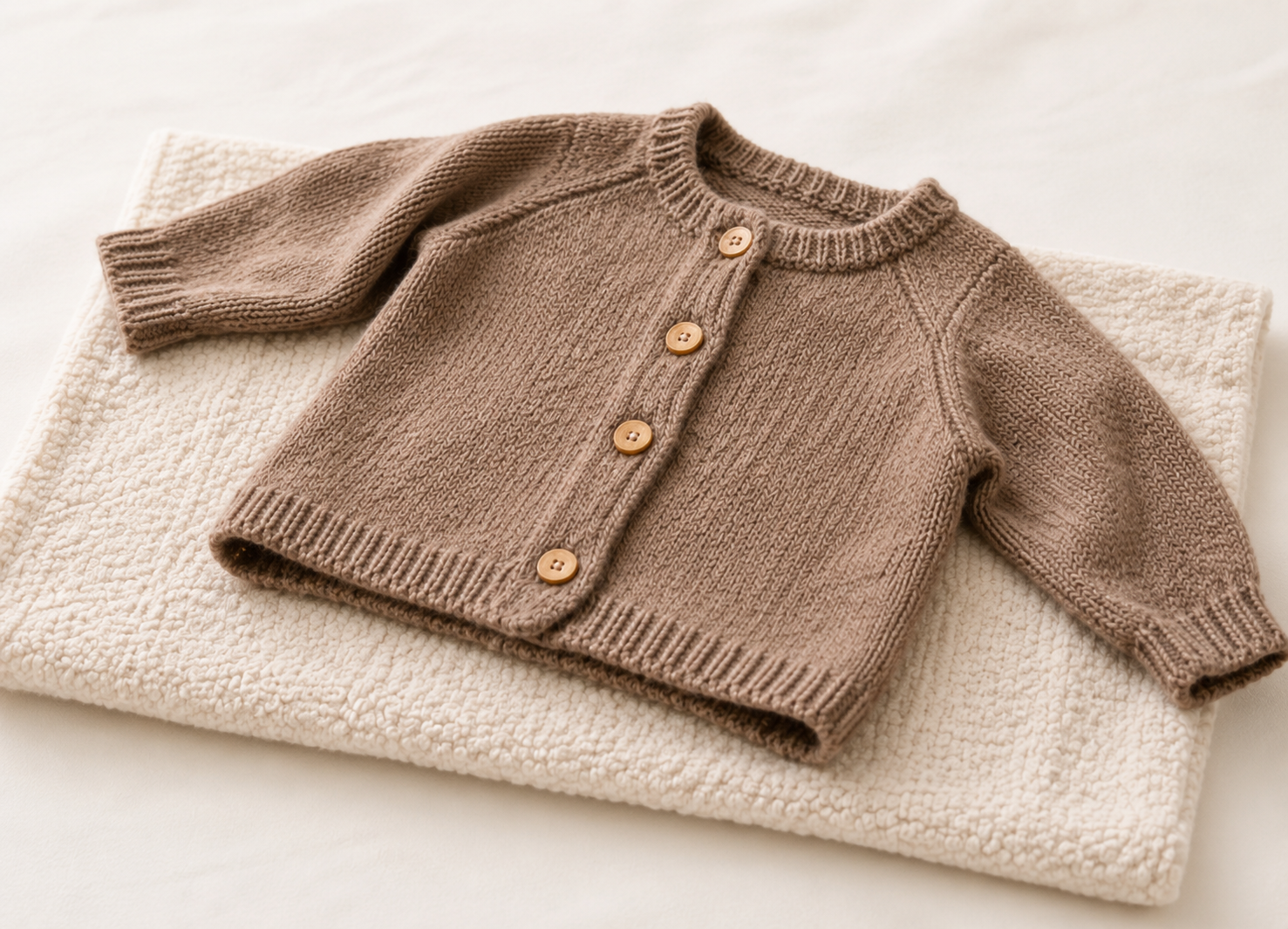
Dry correctly
Wet wool should not be hung up as it can stretch out of shape. Knitted items in particular should be dried flat.
How to do it:
Lay the garment on a dry towel, gently pull it into shape, and allow it to air dry slowly.
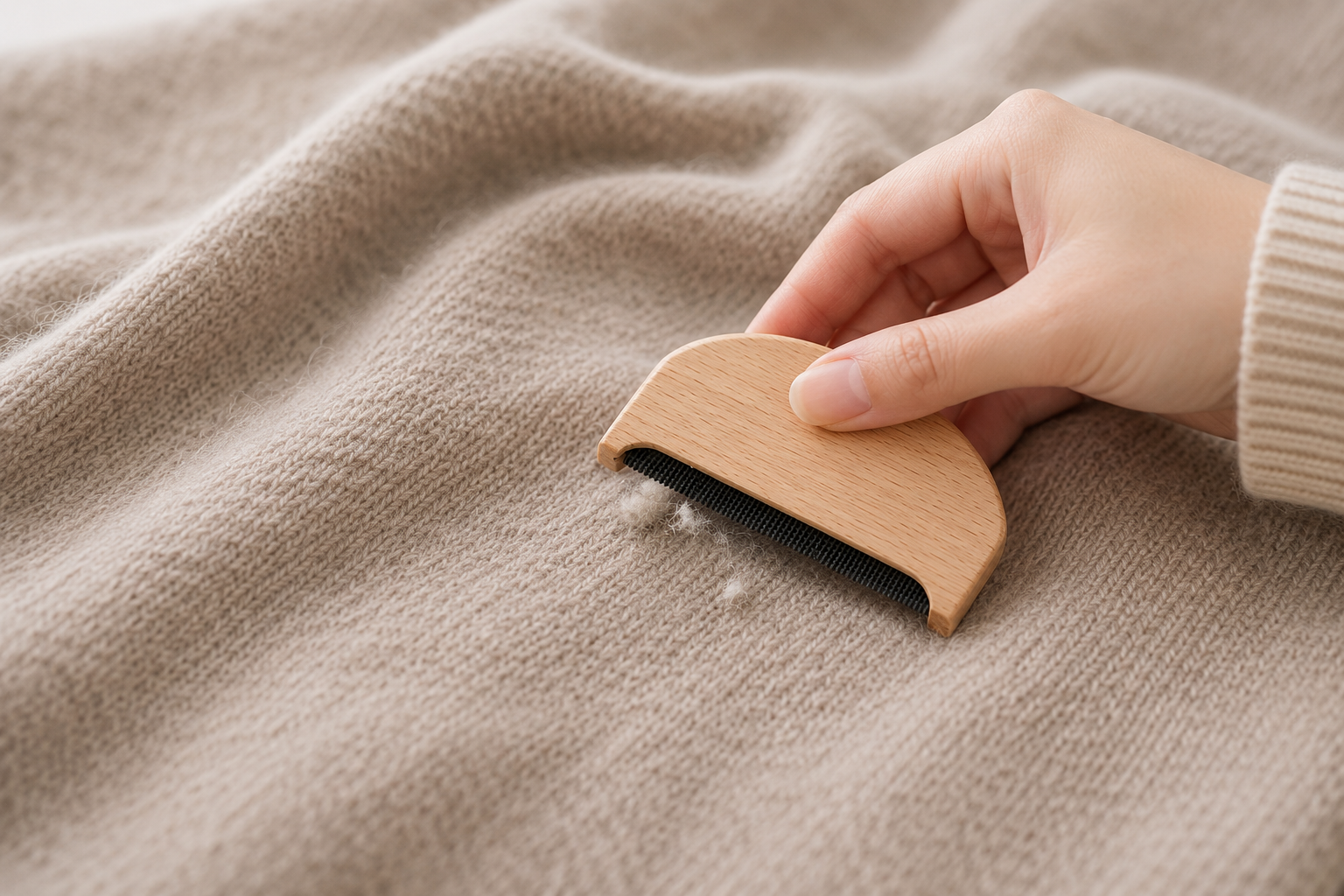
Pilling: completely normal for natural fibers
With soft natural fibers, small knots can form. This is not a quality defect but is caused by friction - especially on arms, sides, cuffs, or between the legs.
Care Tip:
Carefully remove pilling with a wool comb or lint shaver. Afterwards, the garment will look tidier again.
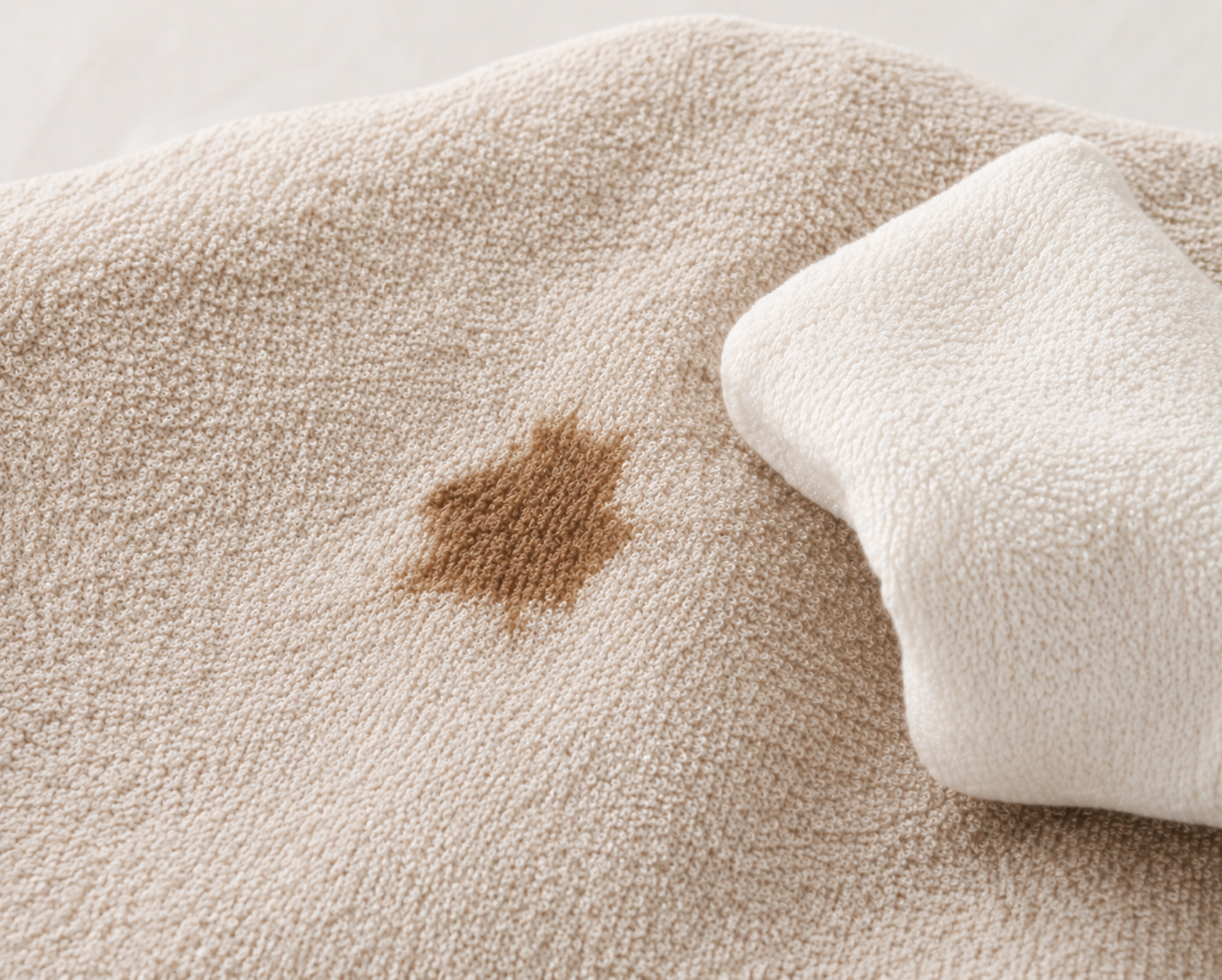
Stain removal
Treat stains immediately.
- do not rub vigorously
- dab carefully
- use lukewarm water
- use suitable detergent
- for delicate materials, test first on an inconspicuous area.
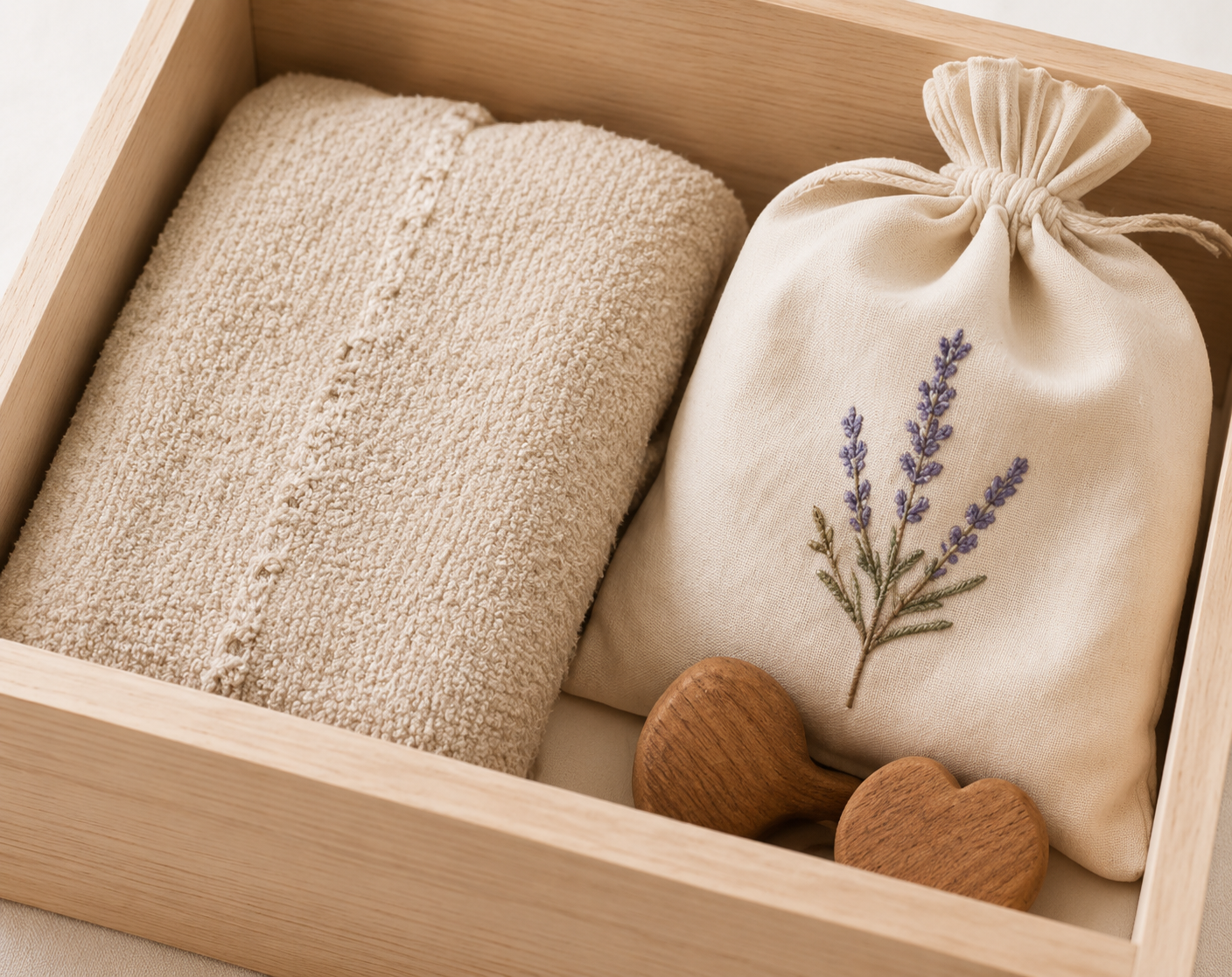
Store correctly
Wool items should be clean and completely dry before long-term storage.
Well suited:
Cotton bags, dry drawers, cedar wood, or lavender.
| Material | Waschen | Trocknen | Hinweise |
|---|---|---|---|
| Merinowolle | Wollwaschgang / Handwäsche max. 30 °C | Liegend | Oft reicht Lüften |
| Kaschmirmix | Sehr schonender Wollwaschgang / Handwäsche | Liegend | Nicht reiben oder wringen |
| Wolle-Seide | Handwäsche oder sehr sanftes Wollprogramm | Liegend | Nicht einweichen |
| Wollwalk | Selten waschen (meist ausbürsten / lüften) | Liegend | Nicht oft waschen – wasserabweisende Schicht erhalten |
| Leinen | Maschinenwäsche max. 40 °C | Lufttrocknung | Leicht knitterig = natürlich |
Frequently Asked Questions
How often do I need to wash wool clothes?
As seldom as possible. Often airing out is sufficient.
Why can't wool go in the dryer?
Heat and movement can cause the fibers to felt or shrink.
Which detergent is right?
A mild wool detergent without enzymes. You can find our recommendation here.
What should I do if a part has shrunk?
Relax carefully in lukewarm water, gently pull into shape and dry flat. Do not pull hard.
Is "Pillig" a reason for a complaint?
Pilling can occur on soft natural fibers due to friction and is a normal material characteristic. Here you can find our recommendations.