


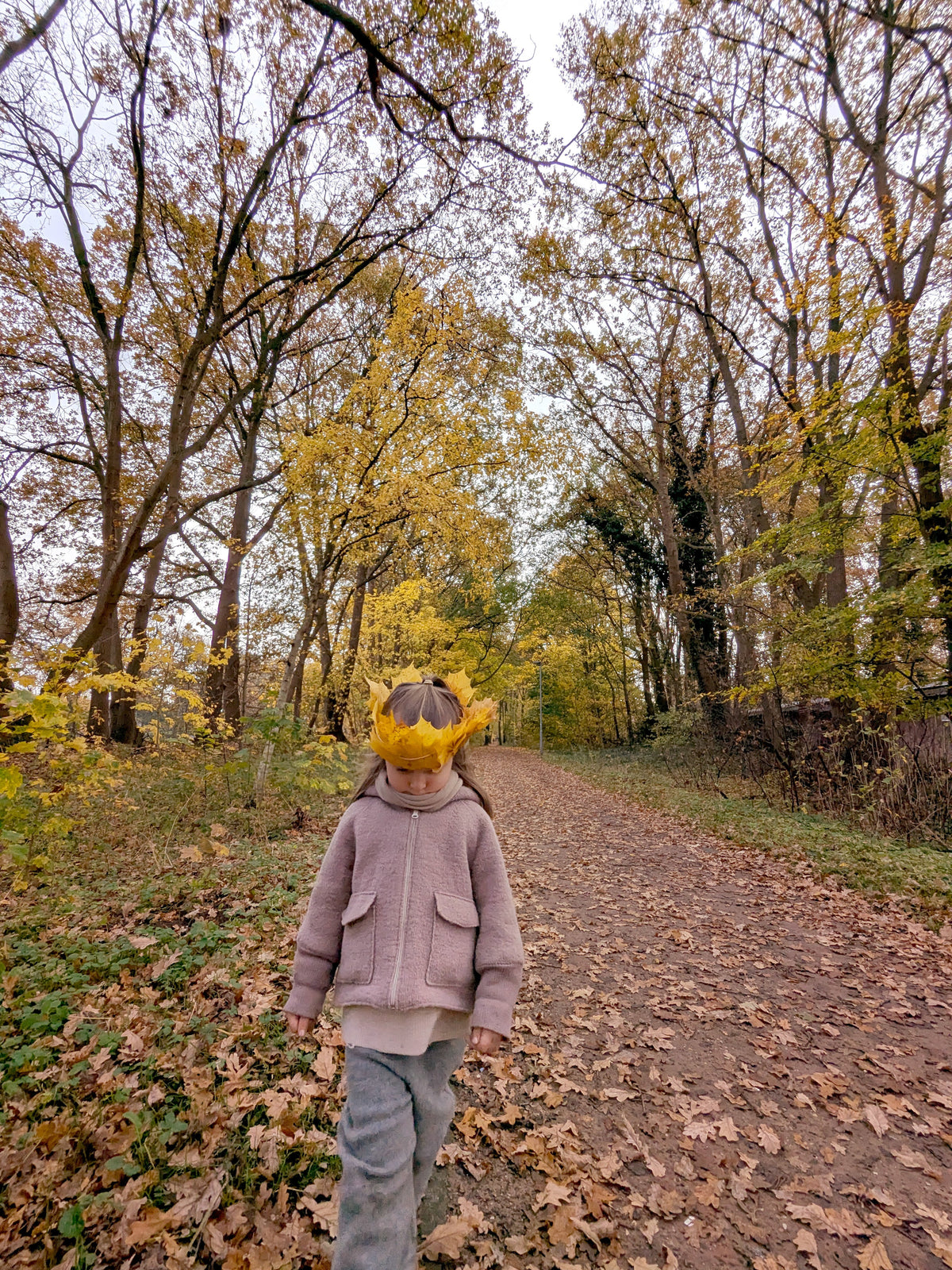
Forest Pedagogy for Children – Small Adventures, Big Impact
Out into nature, straight into adventure! When was the last time our children walked barefoot across a meadow, played in the mud, or simply listened to the sounds of the forest?
In a world that is becoming faster and more digital, it is often the simple things that enrich us the most. The forest is a wonderful place to rediscover freedom, imagination, and our connection with nature.
We spoke with Karen Werning (32), a social pedagogue, trauma pedagogue, and forest and wilderness educator, about why nature experiences are so valuable for children, why the right clothing plays an important role, and how we can set an example for our children in mindful interaction with our environment.
The Forest as a Place of the Heart – Karen's Path to Wilderness Education
Karen worked in youth welfare for many years, is a foster mother, and found her personal calling in wilderness education. After completing her training as a wilderness educator, she also completed further training as a forest educator and is currently training to become a wilderness mentor.
She doesn't have a typical workday: she accompanies forest groups, organizes parent-child camps, forest birthdays, family days, and women's circles.
What connects all these offerings? Nature as a space for genuine encounters, growing together, and unforgettable experiences.
Playing, Wondering, Discovering – What a Day in the Forest Looks Like
A day with Karen usually begins with a group walk. Songs are sung, sometimes incense is burned, and the most important rules for respectful interaction with nature are discussed.
After that, the children are allowed to do one thing above all: play freely.
Because the forest doesn't need pre-made toys. A stick becomes a magic wand, a fallen tree a pirate ship, and a small hill an exciting slide.
In addition, they carve, craft, cook, or make a fire. Imagination plays a particularly big role for four- to six-year-olds. Here, the children are sometimes even accompanied by Zola, the forest fairy, who transforms the forest into a magical world with her stories.
Not every child feels comfortable with this right away. Some are afraid of insects, dirt, or unfamiliar noises. But Karen repeatedly experiences how initial uncertainty turns into genuine enthusiasm.
"Just go out! Regardless of the weather, as often as possible."
And what if motivation is lacking? A small picnic in the greenery can work wonders.
Getting Dirty is Expressly Allowed! Why the Right Clothing is So Important
Anyone who goes outdoors with children knows it: As soon as you arrive in the forest, there is climbing, running, and sliding. And of course, sometimes your bottom ends up in the mud.
For Karen, that's exactly part of it. But so that children can truly experience nature carefree, they need clothing that can keep up.
"You can go straight back home with freezing children," she says. Because anyone who is cold or constantly has to make sure they don't get dirty can hardly immerse themselves in the adventure.
Karen repeatedly sees children who come to her offerings wearing white sneakers or delicate clothing. If their shoes aren't allowed to get dirty or their pants restrict them while climbing, many valuable experiences are missed.
Her wish: Clothing should not restrict children, but give them the freedom to be children.
Naturally Outdoors – Why Wool and Boiled Wool Are So Good for the Forest

Especially during longer stays in nature, the material of the clothing plays an important role. Karen particularly appreciates natural materials like wool and boiled wool.
And for good reason:
- Warm and breathable: Wool helps regulate body temperature and provides a pleasant feel.
- Comfortable and movement-friendly: Soft wool clothing offers plenty of freedom of movement.
- Easy-care: Often, it is enough to air out wool clothing or brush out dry dirt.
- Pleasantly quiet: Unlike many synthetic materials, wool hardly rustles – perfect for hide-and-seek games.
- Durable: High-quality wool clothing can be worn for many years by several children with proper care.
Another advantage: Wool does not melt when it comes into contact with sparks like many synthetic fibers. Especially during activities around a campfire, this is a plus – of course always at a sufficient distance and under supervision.
For us at HALFEN, this is exactly one of the reasons why we love wool so much. It combines functionality with naturalness and a wonderfully soft feel.
Clothing that keeps you warm, protects you, and at the same time leaves room for small and large adventures.
"Which living room are we sitting in here?"
One of the most beautiful questions Karen asks the children in the forest is:
"Which living room are we sitting in here? Who actually lives here?"
A simple question with an important message: The forest is not just our adventure playground, but the home of countless animals and plants. We humans are only visiting.
That is why the children learn with Karen to treat nature respectfully, not to leave trash behind, not to break branches, and to be mindful even when gathering wild herbs.
Because anyone who experiences nature with all their senses often develops the desire to protect it all on their own.
Sustainability Starts Small – Also in the Wardrobe
What does our clothing actually have to do with our connection to nature? For Karen, quite a lot.
Because mindful interaction with resources does not end at the forest edge. The decisions we make in everyday life also convey important values to our children.
Does everything really need to be bought new? Can we repair a broken pair of pants instead of throwing them away? And why not pass on a beloved jacket to the next child?
Karen herself relies on durable, high-quality clothing and enjoys buying second-hand. Platforms like Vinted, clothing exchanges, or swap markets are great ways to shop consciously and at the same time budget-friendly.
And what if a hole does appear? Then it is simply mended or a beautiful patch sewn on.
Old things not only become wearable again, but sometimes even a new favorite piece.
Clothing with as many pockets as possible! After all, all the little treasures discovered on the go also need to be stored somewhere.
More Nature. Less Obligation.
What do we take away from our conversation with Karen?
Children do not constantly need new toys, perfect outings, or a planned leisure program.
Sometimes they just need a forest, a little time, and the freedom to discover their own world.
And we adults can also be a little childlike again. Wonder, play in the mud, listen, smell, feel, and perceive the little wonders around us.
Because anyone who learns to love nature will also want to protect it.
So: Dress warmly, pack a small picnic, and go out. The next big adventure might already be waiting right outside your front door.
Learn more about Karen and her forest adventures
Would you like to immerse yourself in the world of forest and wilderness education with your children?
On her website www.rausgewildert.de, you can learn more about Karen, her work, and her nature-pedagogical offerings for children, families, and adults.
Thank you very much, dear Karen, for the inspiring conversation and for bringing nature closer to children and adults in such a wonderful way.
Natural. Timeless. For small and large adventures.
Your HALFEN Team
Naturally Outdoors
Clothing that keeps you warm, protects you, and at the same time leaves room for small and large adventures.
To the jackets →
Teilen:
Boiled Wool Dungarees for Children: What They Really Offer – and When They Are the Better Choice